Hawaiʻi has some of the strictest agricultural inspection rules in the U.S. Here's what you cannot bring to the islands — and how to complete the new digital declaration form before your flight.
Hawaiʻi is one of the most isolated island chains on Earth — and that isolation is exactly why it enforces some of the strictest agricultural inspection rules in the United States. A single piece of fruit or plant carrying an invasive pest could cause millions of dollars in damage to the islands' agriculture and environment. Before you pack your bags, here's what you need to know.
Gone are the days of borrowing a pen over the Pacific. As of March 2025, Hawaiʻi launched ʻAkamai Arrival — a digital Plants and Animals Declaration Form that replaces the paper form previously handed out on flights.
You can complete it up to five days before your departure at akamaiarrival.hawaii.gov. The form is available in six languages and takes just a few minutes. All major airlines — Alaska, American, Delta, Hawaiian, Southwest, and United — include it in pre-departure messaging.
The digital form already shows a 72% completion rate, up from 60% with paper. Complete it before you board so you're not scrambling at the inspection checkpoint.
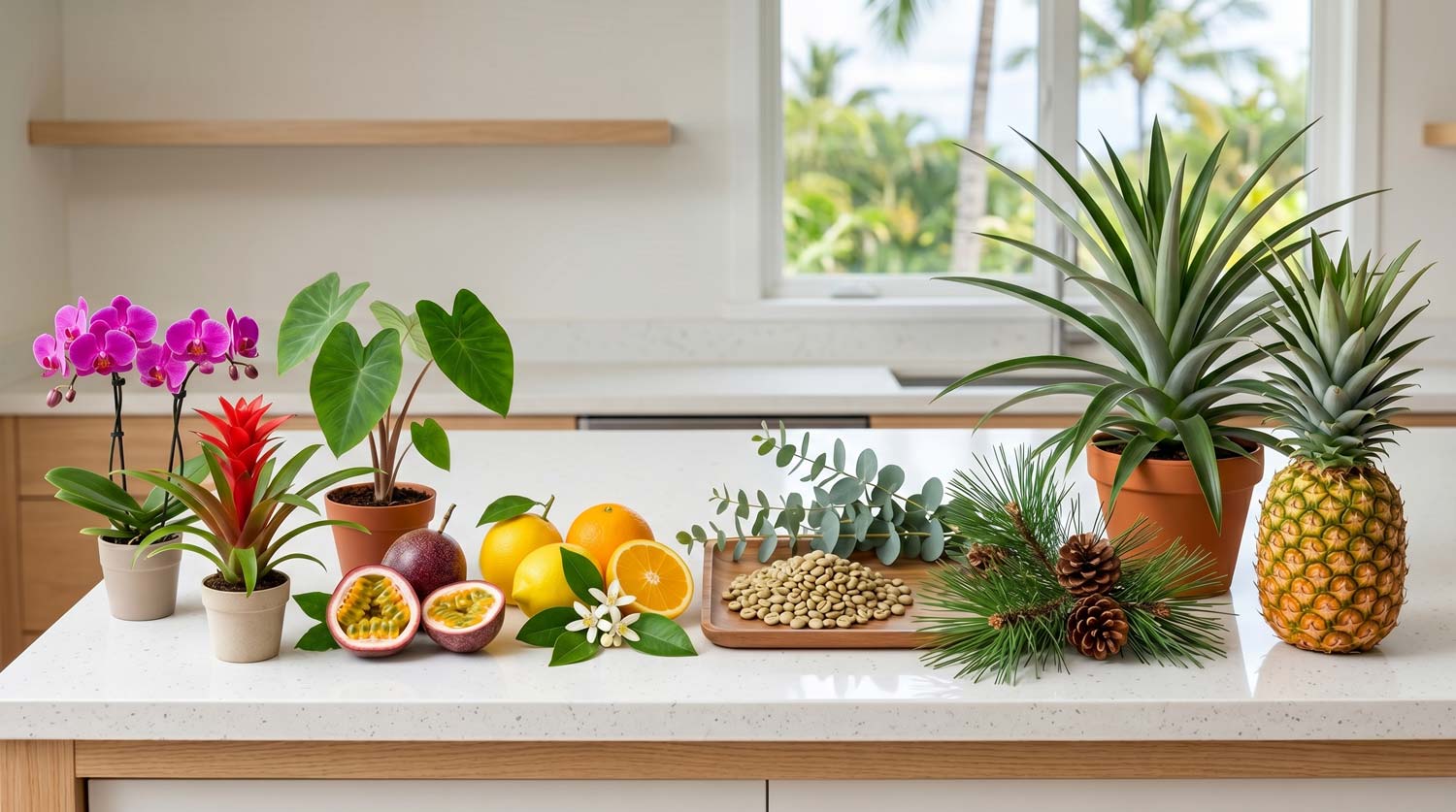
Hawaiʻi aggressively screens incoming plant material to prevent invasive pests and diseases from reaching its farms and forests. The following plants and plant parts are prohibited or heavily restricted:
Citrus plants and flowers (especially from Florida and Puerto Rico due to Caribbean fruit fly)
Passion fruit plants and seeds
Taro and dasheen plants
Bromeliad plants
Orchids and certain flowering plants (aster, chrysanthemum, dahlia, gladiolus)
Coffee plants and green (unroasted) coffee beans
Palm, coconut, and banana plants (fruit is fine; plants are not)
Pineapple plants (pineapple fruit is allowed)
Pine branches (except October 20 – December 31)
Grass plants and fresh-cut plant parts
Myrtle and eucalyptus plants
All plant material must be free of soil, insects, and signs of disease. When in doubt, leave it behind.
Most fresh produce is restricted or must pass inspection. Items of particular concern include:
Citrus fruits from Florida and Puerto Rico
Cruciferous root vegetables — radish, turnip, daikon, horseradish, and rutabaga
Any fresh produce showing signs of soil, insects, or disease
Commercially canned, frozen, or processed fruits and vegetables are generally permitted. When in doubt, check with the Hawaiʻi Department of Agriculture before packing.
Hawaiʻi is one of the few places in the world free of rabies — and the state intends to keep it that way. Bringing pets to Hawaiʻi is possible but requires strict advance preparation including rabies vaccinations, microchipping, and a state-approved veterinary inspection. Failure to comply can result in quarantine or immediate return of the animal.
The following animal products are also restricted:
Raw meat and raw poultry
Home-cured meats and beef jerky
Unpasteurized dairy products
Animal hides without inspection approval
Violations of animal import rules carry penalties of up to 3 years in prison and $500,000 in fines.
Soil of any kind is prohibited — even small amounts on shoes, garden tools, or hiking gear can carry invasive organisms. Clean your footwear and outdoor equipment before traveling.
Non-commercially packaged seeds are also restricted. If you're bringing seeds as a gift or souvenir, they must be in their original, sealed commercial packaging.
Restrictions don't just apply when arriving from the mainland — inter-island travel has its own rules. Most notably, ʻōhiʻa plants and parts (flowers, leaves, seeds, stems, twigs, cuttings, untreated wood, logs, and mulch) from Hawaiʻi Island are under strict quarantine due to Rapid ʻŌhiʻa Death, a devastating fungal disease. Transporting them to other islands requires a permit from the Hawaiʻi Department of Agriculture. Fines range from $100 to $25,000 for repeat offenders.
Agricultural inspectors screen all checked bags before airline check-in. Prohibited items are confiscated on-site. Knowingly failing to declare agricultural items is both a federal and state offense — fines can reach $25,000 for individuals.
If you have questions before traveling, contact the Hawaiʻi Department of Agriculture Plant Quarantine Branch at (808) 832-0566.
Not everything is off the table. These items are generally permitted:
Commercially canned and processed foods
Roasted coffee (no limit)
Frozen fruits (if frozen solid at inspection)
Cooked, canned, or commercially processed meats from the U.S. mainland
Most packaged snacks and dry goods
When in doubt, buy it when you arrive. Hawaiʻi has incredible local produce, coffee, and food worth discovering on the islands themselves.